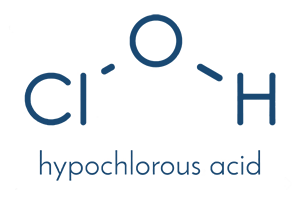
In 1811, Sir Humphry Davy, English Chemist, discovered Hypochlorous acid (HOCI), the most effective disinfectant of the century. 12 years later, Michael Faraday, British physicist, successfully used electrolysis to produce hypochlorous acid. A key weakness of hypochlorous acid is that it is easy to break down and cannot be kept for a long period, and due to the limitation of science and technology, only a small quantity can be produced, thus, it has not been adopted for use widely. However, during the First World War, hypochlorous acid has become a common disinfectant used for the rapid treatment of wounds and trauma of the injured soldiers. And in January 2006, in the "JOURNAL OF WOUND CARE", a special report was published highlihting the effectiveness of the hypochlorous acid for the treatment of ulcers.
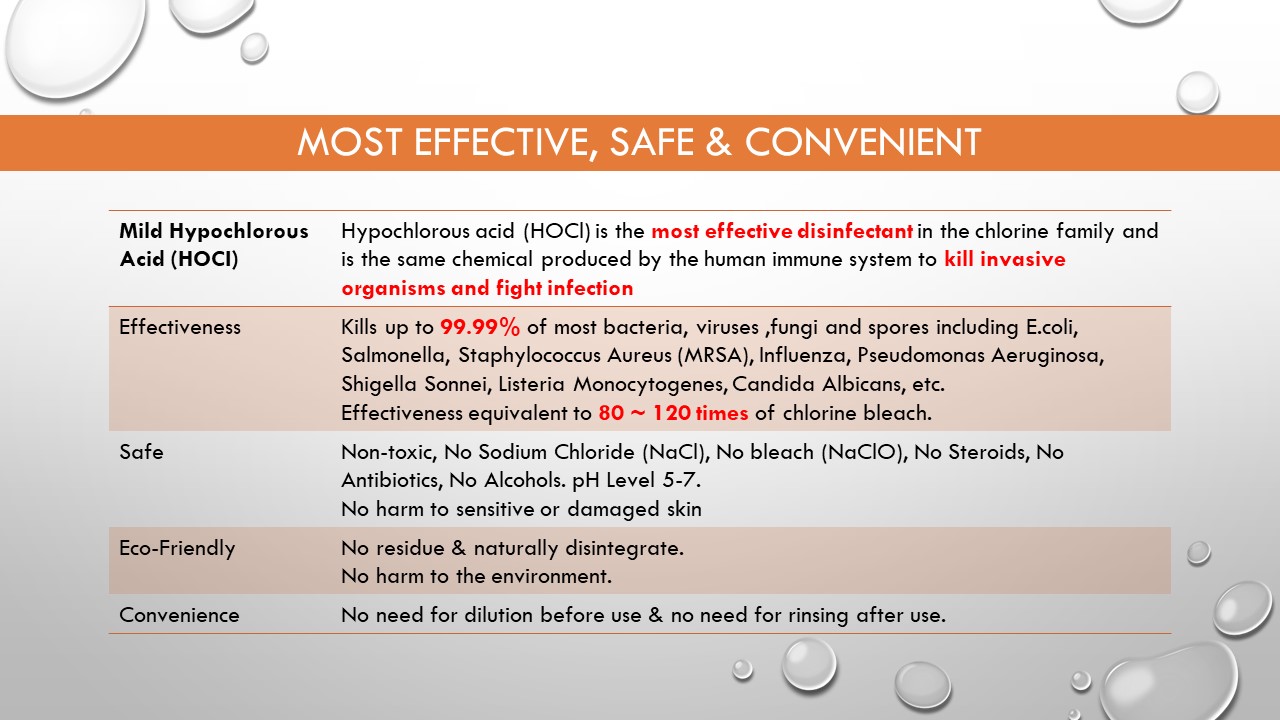
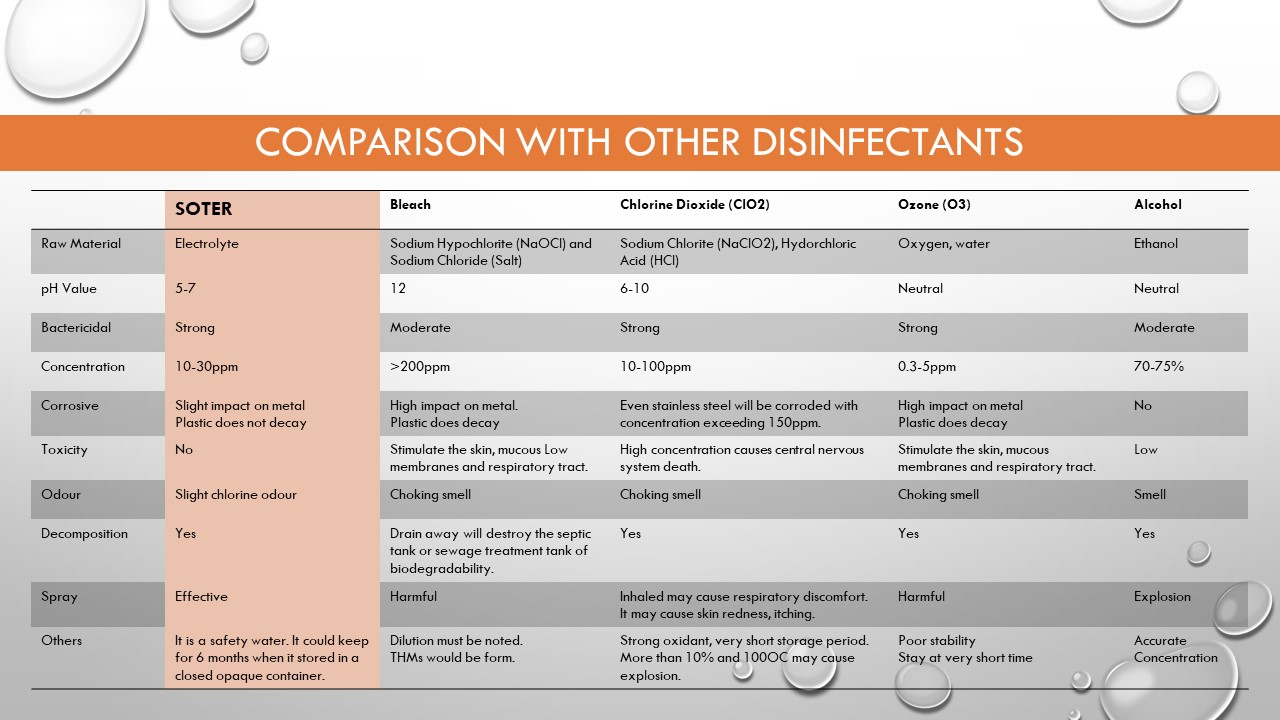
HOCI is used commonly in healthcare, food safety, water treatment and general sanitization. It is one of the most effective known biocides. This weak acid with the chemical name HCIO or HOCI is the same chemical produced by the human immune system to kill invasive organisms and fight infection. It is the most effective disinfectant in the chlorine family available in dilute solution - 80 to 120 times more efficacious than BLEACH. Because HOCI has no charge and has a relatively low molecular weight, it is better able to penetrate the cell walls than other chlorine based disinfectants.
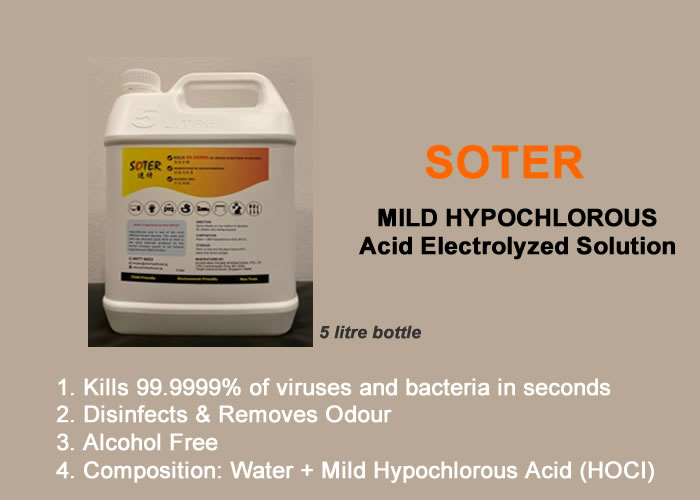
THIS IS SOTER !
an innovative SOLUTION !
a better disinfectant SOLUTION !
a habitual cleaning SOLUTION !
the new SOLUTION for a healthy New World !